
SCAG Publishes Two New Resources for Regional Resilience
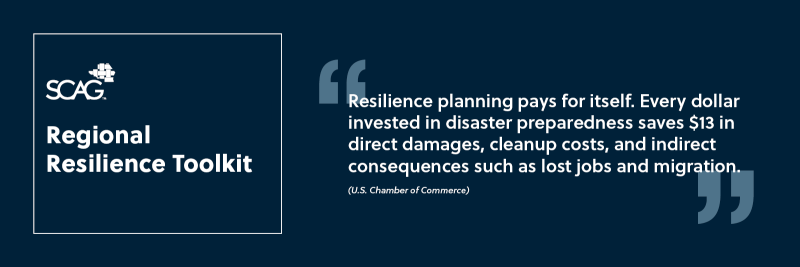
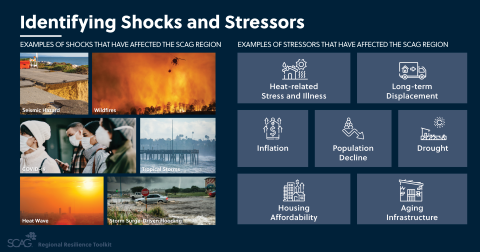
Environmental risks, such as drought, wildfire, and earthquakes, don’t stop at city boundaries. Collaborative planning, information and resource sharing, and big-picture thinking can limit the effects of disasters and accelerate recovery for the local communities and the entire Southern California region.
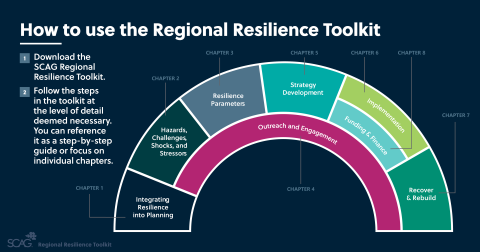
The SCAG Regional Resilience Toolkit, published today, shares resources and information to support Southern California communities, cities, and counties with resilience planning. The toolkit is intended for use by any jurisdiction in Southern California, regardless of size, population, experience in resilience planning, or direct encounters with the shocks and stressors of the current age.
The toolkit helps local jurisdictions:
- Understand the benefits of local and regional resilience planning.
- Plan for resilience at multiple scales, from integrating it into existing plans and programs to developing a standalone plan.
- Clearly outline key resilience planning steps.
- Identify and pursue funding resources and strategies.
Alongside the Regional Resilience Toolkit, SCAG is also publishing a new “Water Resolution White Paper” to evaluate shared water management challenges and identify opportunities for stronger coordination, investment, and technical support across jurisdictions.
Both resources explain how collaborative resilience planning at the local level can achieve regional benefits to protect Southern Californians now and in the future.
For more information on SCAG’s work to support local jurisdictions plan and build a more resilient region, visit the SCAG Adaptation and Resilience website.