
- Connect SoCal
- Inclusion, Diversity, Equity & Awareness
- Programs & Projects
- Housing
- Economy & Demography
- Federal & State Compliance
- Sustainable Development and Resilient Communities
- Transportation
- Active Transportation
- Planning For Main Streets
- Aviation Program
- Regional Pilot Initiatives Program
- Future Communities Pilot Program
- Transportation Demand Management
- Transit Program
- FreightWorks
- Passenger Rail Program
- Corridor Planning
- Transportation Safety
- Transportation Finance
- Intelligent Transportation Systems
- Southern California Transportation Study
- LA28 Games Mobility Program
- Local Resources
- Funding & Programming
- Legislation & Advocacy
- Publications & Reports
Go Human
SCAG's Go Human community engagement program aims to reduce traffic collisions in Southern California and encourage people to walk and bike. SCAG works to create safer and more connected communities by sharing resources for engagement, education, information, projects, and events.
Go Human is funded by grants from the California Office of Traffic Safety and the California Active Transportation Program.
Questions?
Email gohuman@scag.ca.gov with any questions.
Follow us!
Stay informed about the campaign by signing up for our newsletter and following Go Human on Facebook, Twitter, Instagram and LinkedIn.

Community Streets Grant Program
With support from the California Office of Traffic Safety (OTS), the 2024 Go Human Community Streets Grant Program (Community Streets Program) granted funding to implement traffic safety strategies through community engagement projects. SCAG anticipates another Call for Applications for the Community Streets Program in 2026, pending funding availability.
The Community Streets Program supports projects that facilitate community resilience, recovery, and resource delivery, prioritizing outcomes for low-income families and communities of color, especially those most harmed by traffic injuries and fatalities.
Program Goal
The Community Streets Program builds street-level community resilience by increasing the safety of people most harmed by traffic injuries and fatalities, including, without limitation Black, Indigenous, and People of Color; people with disabilities; and elders, particularly those walking and biking. The Community Streets Program improves traffic safety locally and across the Southern California region, leveraging and building community leadership committed to traffic safety and prioritizing projects that center historically excluded or disinvested communities, mobility justice, disability justice, and rural community investment, among others.
Rather than focusing on the behavior of people walking and biking, the Community Streets Program targets structural issues that affect the safety of people walking and biking, such as dangerous driving behavior, high vehicle speeds, street design, and structural racism. Applicants are encouraged to propose creative, strategic projects that center justice and respond to program goals and communities’ current needs.
Eligibility
Community-based organizations, nonprofits, and social enterprises are eligible to submit a Community Streets Program proposal. Public agencies and entities with 501(c)4 status are not eligible for this program.
Funding is available to recipients across the SCAG region, which encompasses the counties of Imperial, Los Angeles, Orange, Riverside, San Bernardino, and Ventura counties.
Final Report
- 2024 Go Human Community Streets Final Report
- 2023 Go Human Community Hubs Final Report
- 2022 Final Report
- 2021 Final Report, Awardee Announcement, Stories, Video Snapshot
- 2020 Final Report, Awardee Announcement
- 2018 Project List
Explore the Community Streets Mini-Grants StoryMap.
Borrow the Go Human Kit of Parts
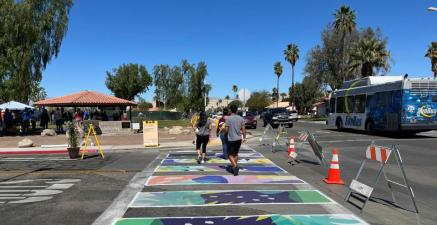
SCAG’s Go Human Kit of Parts Lending Library provides pop-up materials to temporarily demonstrate potential and planned street design treatments and safety infrastructure to create safer and more inviting public spaces.
The Go Human Kit of Parts includes materials to showcase five street treatments. The street treatments include a parklet, curb extension (bulb-out), median refuge island, artistic crosswalk, and separated bike lane. The Kit of Parts is made of portable, light-weight materials that are easy to transport and assemble.
Temporary safety demonstrations create opportunities for residents, planning and engineering staff and community leaders to experience, test, refine, and support infrastructure improvements in live traffic settings.
For more details or to borrow the Kit of Parts, contact us at gohuman@scag.ca.gov.
Kit of Parts Lending Library Resources
The following resources can provide frameworks, generate ideas, and clarify logistics to help plan a successful Kit of Parts deployment.
Resilient Streets Toolkit: Toolkit promotes the use of street space for community resiliency, recovery, and resource delivery in a way that prioritizes vulnerable communities.
Guide & Installation Video: Watch the Kit of Parts Overview Guide and installation video to provide a clear picture of the hardware, assembly, installation, and dimensions of the materials involved in a Kit of Parts deployment.
Survey: The Kit of Parts serves as an engagement tool to collect feedback from the community about potential safety improvements. Use or adapt the following survey at a Kit of Parts activation to gather input about the temporary improvements.
Info Sheets
Kit of Parts Activation Event Playbook
Use this playbook to implement a temporary traffic safety demonstration event using the Kit of Parts. The playbook offers step-by-step instructions to achieve important event milestones, such as gathering a project team, setting event goals and objectives, planning and preparing for the event, working with SCAG and jurisdictional partners, coordinating day-of event logistics, and much more.
View the Kit of Parts Playbook
- Appendices
Fillable Worksheets
- Getting Started
- Kit of Parts Logistics
- Promoting and Advertising
- Additional Preparations
- Event and Post-Event Actions
Events
- 2024 Events and Activities
- 2023 Events and Activities
- City of Lancaster: Walk N Roll Fest
- Town of Altadena: "Kit of Parts" Demonstration
- City of Santa Ana: Willard Safe Streets Summer Night Celebration
- City of Irvine: Re-Envision South Yale Avenue
- City of Port Hueneme: "Kit of Parts" Demonstration
- City of Duarte: Summer Concert Series
- City of Jurupa Valley: Skate Thru Summer
- City of Buena Park: "Kit of Parts" Demonstration
- 2022 Events and Activities
- Fresno County With the ATRC
- City of Imperial
- City of Los Banos, CA With the ATRC
- Town of Paradise, CA With the ATRC
- Go Human Pop-Up Safety Demonstration Project, Glendora, CA
- Century Villages at Cabrillo End of Summer Block Party
- City of Laguna Niguel and Niguel Hills Middle School
- Washington Neighborhood Community Corners
- Willard Safe Street
- CICLAVIA South LA
- Community Festival, City of Azusa
- Activate Fair Oaks, City of Pasadena
- Pomona Town & Gown Bike Ride
- City of San Bernardino
- City of Cathedral City: "Kit of Parts" Demonstration
- 2021 Events and Activities
- Go Ojai Demonstration Project
- City of El Monte: "Kit of Parts" Demonstration
- Indio's Streets Are Treats
- Activate Artesia BLVD @ The Uptown Jazz Fest
- Go Active Wildomar
- 2019 Events and Activities
- Glendora's Roll to the Stroll
- Meet On Beach
- Past Reports 2017-2018
Final Reports
- Phase I Report
- Phase II Report
La Quinta –Mini-Report
Costa Mesa –Mini-Report
Walnut Park – Mini-Report/Video
West Covina – Video
Ontario – Mini-Report
Culver City – Mini-Report
Chino – Mini-Report/Video
San Jacinto – Mini-Report
La Cañada Flintridge – Mini-Report/Video
Lake Elsinore – Mini-Report
Riverside – Mini-Report
Co-Branding
Bring Safety Messaging Materials to Your Community
SCAG's Go Human regional safety campaign encourages drivers to slow down and watch for people walking and biking. Based on data from SCAG, people who walk and bike experience a disproportionate share of serious injuries and fatalities in traffic crashes.
SCAG provides Go Human safety advertisements, co-branded with partner logos, at no cost to local jurisdictions, agencies, nonprofits, and community-based organizations. Eligible organizations can request print or digital material. Standard print resources will be available in 2026.
Explore examples of advertisements, social media graphics and posts, and newsletter content in the Go Human Message Showcase.
From webinars to workshops, fact sheets to training materials, Go Human offers a variety of resources and tools to learn and take action to make your community safer to walk and bike.
Traffic Safety Webinars
- Webinar #1: Accessing and Using Data to Evaluate Traffic Safety
This webinar focused on data that practitioners and the general public can use to enhance safety in their communities, with an emphasis on pedestrians, cyclists, and other vulnerable road users. Viewers learned about UC Berkeley’s Transportation Injury Mapping System (TIMS), as well as SCAG’s efforts to measure pedestrian and bicycle activity throughout the region. Participants also learned how to use data to prioritize safety interventions.
Moderator
- Riley O’Brien, Estolano Advisors
Speakers
- SangHyouk Oum, Applications Program Manager, UC Berkeley Safetrec
- Hannah Keyes, Associate Regional Planner – Active Transportation and Special Programs, SCAG
- Dr. Do Kim, Professor, Department of Urban Regional Planning, CalPoly Pomona
- Madeline Brozen, Deputy Director, Lewis Center for Regional Policy Studies, UCLA
- Webinar #2: Implementing Traffic Safety: The Southern California Context
This webinar focused on best practices for implementing traffic safety improvements in the SCAG region. Representatives from community-based organizations discussed their challenges and successes in enhancing safety in Southern California’s unique cultural and geographic landscapes. Participants learned how safety improvements relate to climate resiliency, how to engage hard-to-reach populations in planning processes, and the unique safety needs of older populations.
Moderator
- Winnie Fong, Estolano Advisors
Speakers
- Rebecca Zaragoza, Senior Policy Advocate, Leadership Counsel for Justice and Accountability
- Kevin Shin, Co-Chair, Walk Bike Long Beach
- John Yi, Executive Director, Los Angeles Walks
- Webinar #3: Educate and Encourage through SCAG’s Go Human Campaign
This webinar focused on learning about the nuts and bolts of partnering with SCAG on a Go Human campaign, including demonstration events and advertising campaign. Representatives from local cities and public agencies joined the discussion by sharing best practices and experience from their Go Human campaign, including continued engagement after the demonstration events, how these events help position jurisdictions to pursue funding for permanent improvements, and more.
Moderator
- Angela Babcock, Stratiscope
Speakers
- Julia Lippe-Klein, Associate Regional Planner, SCAG
- Alexis Lantz, Policy Analyst, Los Angeles County Department of Public Health
- Melanie Mullis, Principal Transportation-Mobility, City of Ontario
- Eric Ceja, Principal Planner, City of Palmdale
- Webinar #4: Overview of Statewide Policy and Legislation Impacting Traffic Safety
This webinar focused on an overview of past state legislation that allows local jurisdictions to implement and enforce traffic safety measures, as well as an update on the 2019 state legislative session of safety and transportation-related bills that passed the Legislature and are headed to the Governor to sign and veto. Topics included, but not limited to, policies and legislation affecting bicyclist and pedestrian safety, transportation funding, zero traffic fatalities, climate resiliency, and more.
Moderator
- Erika Rincon, Estolano Advisors
Speakers
- David Azevedo, Associate State Director, AARP
- Linda Khamoushian, Senior Policy Advocate, CalBike
- Chanell Fletcher, Executive Director, ClimatePlan
Community Ambassador Program
The Southern California Association of Governments (SCAG), and its Go Human Program, along with California Walks (CalWalks), have developed the Community Safety Ambassador Training Program (Ambassador Program) for Imperial, San Bernardino, and Ventura counties. The program is operated by CalWalks with funding from SCAG and the California Office of Traffic Safety (OTS)
About The Program
The Ambassador Program is a community engagement and leadership development opportunity working with 20 community members per county to complete a training program to build capacity and improve walking and biking safety. The program seeks to strengthen collaboration with local community spaces and stakeholders to make Imperial, San Bernardino, and Ventura counties safer and more pleasant places to navigate on foot or on wheels.
The Ambassador Program is a paid training opportunity that consists of educational and engagement strategies to improve safety through virtual interactive workshops. All successful Ambassadors will earn $500 for participating and supporting facilitation in virtual Training Sessions and accompanying Workshops, as well as co-developing and executing an Activation project. All program activities will be hosted remotely through an online platform, and not in-person due to COVID-19. Ambassadors will be compensated upon completion of the Ambassador Program, including youth.
- Training Coverage
- How to conduct walk and bike assessments
- How to create and support community walking or biking efforts
- How to identify safe places to walk and bike
- How to talk to your city & county about infrastructure changes
- How to collect and where to see crash data for your community
- How to advocate for sidewalks and other safety improvements
- Potential Activation Projects
- Community safety conversations
- Community surveys
- Walk or bike assessment, pending local COVID-19 public health guidelines
- Distribution of educational safety materials
- Campaign to engage city or county staff, neighbors, or other stakeholders
Ambassador Toolkit
Get Inspired! Community Safety Ambassadors Toolkit Now Available.
Over 48 Community Safety Ambassadors from Imperial, San Bernardino, and Ventura counties completed over 30 hours of workshops and trainings this summer. This paid community engagement and leadership development program aimed to build capacity of local leaders and bridge relationships with local governments to improve walking and biking safety.
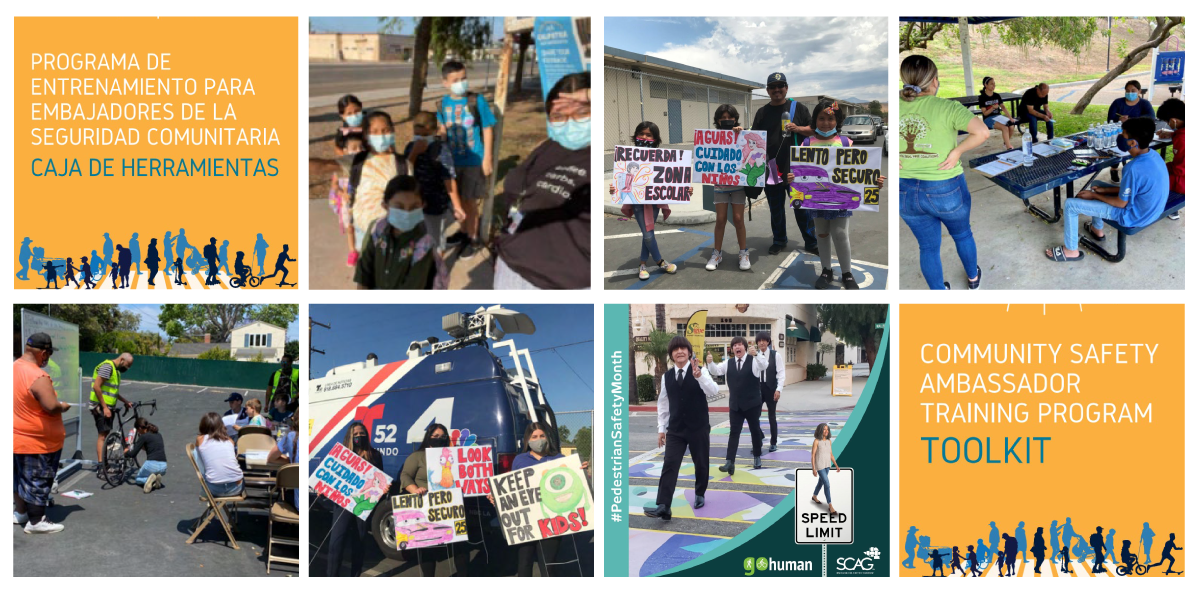
Ambassadors implemented 40+ activities and events to support traffic safety and community engagement in their local communities. Activities and events included community garden activities in Ontario, bicycle safety education in Ventura, temporary demonstration planning in El Centro and Calexico, and more!
Learn more about the program and activations in the Ambassador Toolkit. Also available in Spanish.
Regional Traffic Safety Workshops
In August 2019, SCAG conducted a series of Traffic Safety workshops throughout the SCAG region in the counties of Imperial, Los Angeles/Ventura, Orange and San Bernardino/Riverside. This section provides the panelists’ presentations from the workshops in each region.
Workshop Presentations
Opening Remarks
Essential Elements of Traffic Safety
Imperial County
PANEL SPEAKERS
- Seth Cutter, Senior Transportation Planner, Caltrans District 11
View Presentation - Yoli Viviana Sanchez, Health Program Coordinator, Imperial County Public Health Department
View Presentation - Gordon Gaste, Development Services Director, City of Brawley
View Presentation - Angel Hernandez, Associate Planner, City of El Centro
View Presentation - Miguel Hernandez, Comite Civico Del Valle
Los Angeles County and Ventura County
PANEL SPEAKERS
- Shelly Quan, Sr. Transportation Planner, State Legislative Analysis & Discretionary Grants, Metro
View Presentation - Brett Atencio Thomas, Open Streets Grant Program Manager, Metro
View Presentation - Rene Salas, Public Works Director, South El Monte
View Presentation - Eneida Talleda, T&T Public Relations, Multi-lingual pedestrian safety campaign for the City of Glendale
View Presentation - Kevin Shin, Co Chair, Walk Bike Long Beach
View Presentation
Orange County
PANEL SPEAKERS
- Denise Arriaga Ibarra, Transportation Funding Analyst, Orange County Transportation Authority
View Presentation - Jennifer Rosales, Transportation Services Manager, City of Costa Mesa
View Presentation - Cory Wilkerson, Active Transportation Coordinator, City of Santa Ana
View Presentation - Maria Ruvalcaba Gomez, Youth & Community Engagement Coordinator – Active Transportation, KidWorks
View Presentation
Riverside County and San Bernardino County
PANEL SPEAKERS
- Melanie Mullis, Principal Planner – Transportation and Mobility, City of Ontario
View Presentation - Nathan Mustafa, City Traffic Engineer & Mobility Planning Manager, City of Riverside
View Presentation - Ryan Stendell, Director of Community Development, City of Palm Desert
View Presentation - Demi Espinoza, Senior Equity & Policy Manager, Southern California, Safe Routes to School National Partnership
View Presentation
Planning For Safer Streets
Go Human offers a variety of resources and tools to help plan and build safer streets—from funding information, traffic safety work planning, and sample resolutions, these tools can be tailored to meet the needs of your community.
Work Plan
Use this Traffic Safety Work Plan Exercise to identify missing links to traffic safety, barriers to actions, stakeholders, benefits and concerns, prioritizing desired activities and projects, and identifying next steps for your jurisdiction.
Funding Resources
Refer to this Traffic Safety Funding Guide to identify funding opportunities related to traffic safety, including education/engagement, infrastructure, and planning.
Safety Pledge Resolution Template
Local entities can take the SCAG Safety Pledge to commit to future safety improvements in their area by adopting a resolution that can be customized to meet the jurisdictions’ needs.
SCAG’s Go Human regional safety campaign encourages drivers to slow down and watch for people walking and biking.
Based on data from SCAG, people who walk and bike experience a disproportionate share of serious injuries and fatalities in traffic crashes. The safety campaign focuses on driver speeds, one of the systemic factors that contribute to roadway danger.
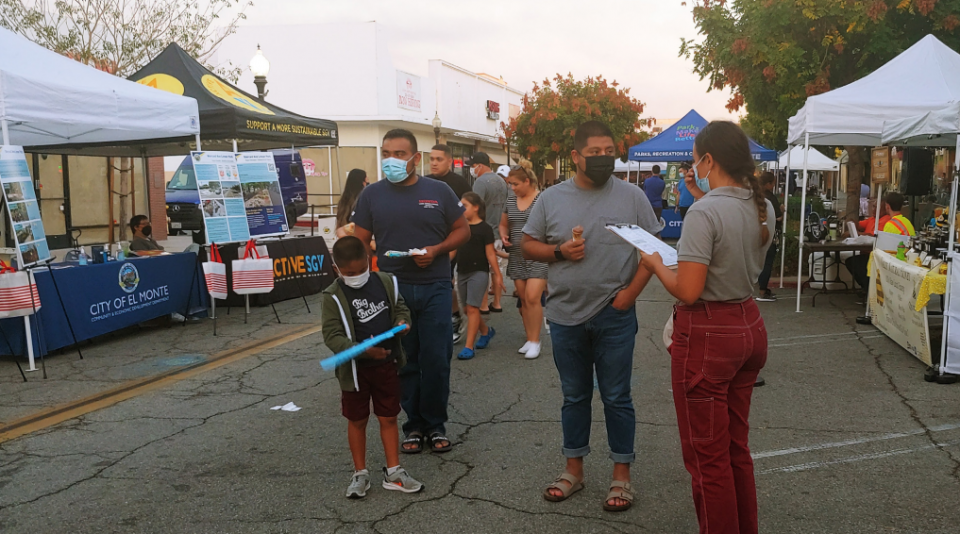 From webinars to workshops, fact sheets to training materials, Go Human offers a variety of resources and tools to learn and take action to make your community safer to walk and bike.
